Back to Browse
📰
News
Cabinet assessment: Mutharika administration records stability gains in year one, delivery lags behind
Posted 13 days ago
36 views0 likes0.0 (0 reviews)
Ratings & Reviews
No reviews yet — be the first to share your experience!
No reviews yet — be the first to share your experience!
Location
Malawi
Posted
Wednesday, August 19, 2026An independent Nyasa Times assessment of government performance ahead of President Peter Mutharika’s first anniversary finds a clear contrast: strong leadership at the top, uneven delivery across cabinet
The President scored 7.6 out of 10, the highest rating. The assessment credits him with fulfilling key pledges. Free secondary education is now in place. The Affordable Inputs Programme reached 1.5 million farmers with markedly reduced leakage compared to past years.
The assessment also highlights early macroeconomic stability. Malawi is renegotiating its IMF programme, inflation has eased, food prices have stabilised, and fuel supply has remained consistent. This marks a decisive break from recent volatility and reflects sound economic management.
Government discipline has improved through reduced official travel, clearance of pension arrears, a leaner cabinet, and greater editorial independence at MBC.
However, critical service delivery gaps persist. Households and businesses still endure 4 to 6 hours of load shedding daily, with no new generation capacity added. Despite $400 million in pledged investments, there has been no measurable job creation. However, there is a caveat that public confidence will depend on tangible results in year two. Ministerial Performance
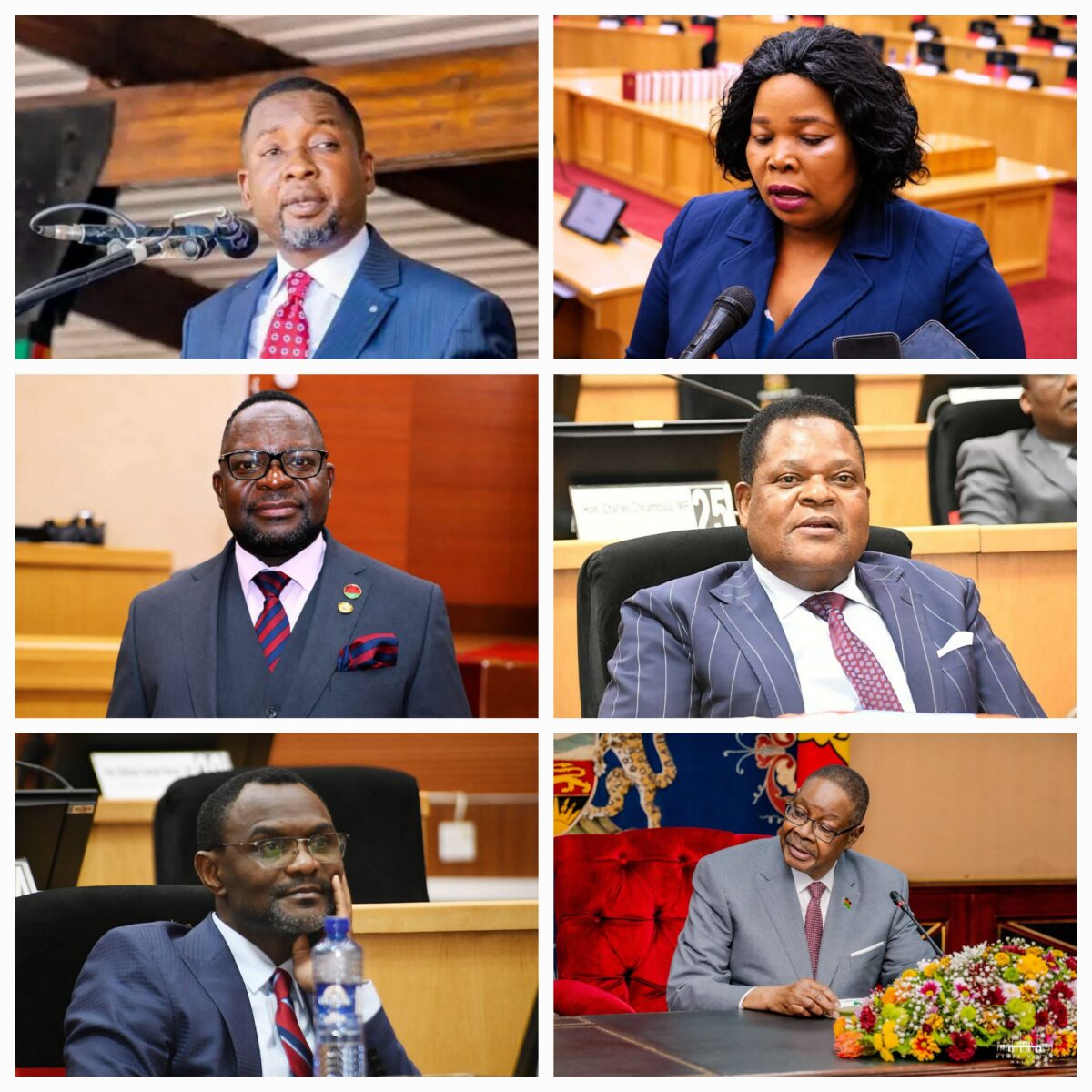
Performance varied widely. Information and Digitalisation Minister Shadreck Namalomba led with 6.7, noted for reforming MBC, though e-government services remain limited.
Finance Minister Joseph Mwanamvekha scored 6.3 for maintaining stability amid forex and fiscal pressures.
Lands and Local Government Ministers Chimwemwe Chipungu and Ben Phiri scored 6.4 and 6.5 for progress on land reform and increasing the CDF to K5 billion per constituency.
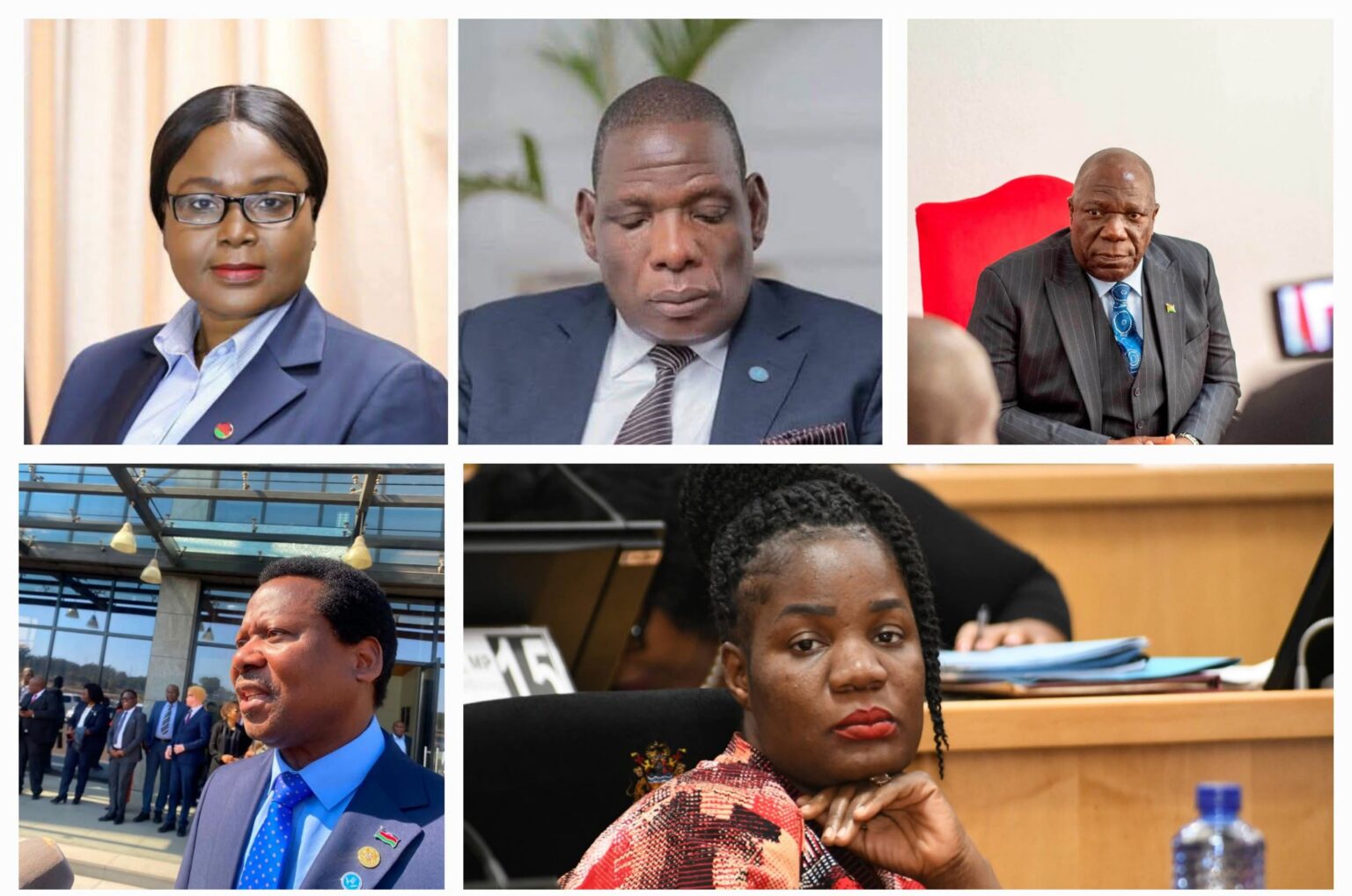
In the middle of the pack, Feston Kaupa, the defence minister, scored 5.9 after securing a security cooperation agreement with Mozambique and delivering new military housing, though budget overruns persist . Peter Mukhito, the homeland security minister, scored 5.5; the report described his tenure as “routine policing in a non-routine crime moment,” noting that a string of killings in Lilongwe and Blantyre had not prompted a dedicated task force, while passport and identity-document backlogs remain unresolved.
Enock Chihana, the second vice-president, was rated 5.8 and described as a reliable executor of assignments delegated to him, though without a signature initiative of his own.
Education Minister Bright Msaka also scored 5.8, credited with delivering the government’s flagship free secondary education policy — the removal of tuition fees at public secondary schools has widened access and lifted transition rates from primary school, particularly among girls and learners from low-income households.
But the report warned that funding has not kept pace with the policy’s ambition: capitation grants to schools remain insufficient, university fees have risen even as secondary schooling was made free, and overcrowding, teacher shortages and material shortages persist despite higher enrolment.
Assessors also flagged that ministry leadership has spent disproportionate time on ceremonial engagements rather than monitoring and oversight, and recommended the ministry shift its focus in year two from launching the policy to properly resourcing and managing it. Foreign Affairs Minister George Chaponda scored 5.7, with the ministry described as maintaining “stable ties, but careless statements hurt.” Relations with the US, EU, China and the SADC bloc have held steady, though no new trade or investment agreements were concluded, and diaspora coordination in the Gulf and South Africa continued without a major labour-protection agreement.
Malawi’s profile within the African Union and SADC was described as low-key, without a signature initiative of its own, while consular backlogs eased only slightly despite a pilot online booking system. The report’s central criticism was communications: messaging was largely reactive, no formal foreign policy strategy has been published, and remarks about the United States were said to have damaged relations. Assessors recommended an economic diplomacy taskforce, a diaspora protection pact, a professional communications protocol and a public foreign-policy scorecard. Roza Mbilizi, the agriculture minister, scored 5, credited with stabilising maize prices even as new data show the staple’s price rising 8 per cent in a single month.
Charles Mhango, the justice minister, and Mary Navicha, the gender minister, both scored 5.2, with the justice system criticised as slow-moving despite new anti-corruption legislation, and gender policy described as strong on advocacy but weak on measurable outcomes.
Jappie Mhango, the transport minister, scored 4.8. The report credited him with finally advancing construction on the M1 highway and other arterial roads after years of delay, and with reviving talks on a national carrier, but said the improvements were “not yet being felt” by the public, and that the Road Traffic Department remains dogged by corruption allegations despite new audits and a pilot digital licensing scheme.
The bottom of the table
Four ministries scored at or below 4.2, a cluster the report’s authors said illustrated the gap between government messaging and results on the ground.
At the lower end, Energy Minister Jean Mathanga scored 4.8 amid persistent blackouts and Escom losses. Mining minister Thoko Tembo and Health minister Madaliso Baloyi scored 4.2 and 4.0 respectively, citing stalled projects and ongoing drug and equipment shortages.
Youth and Sports Alfred Gandata and Trade and Industry Simon Itaye recorded the lowest scores at 3.5, with limited progress on youth employment and exports.
Health Minister Madalitso Baloyi and Natural Resources and Forestry Minister Patricia Wiskes both scored 4.0. Baloyi’s ministry was cited for ongoing drug and equipment shortages, while Wiskes was summed up in the report as “planting trees while losing forests.” She was credited with continuing the National Tree Planting Season, expanding donor-backed reforestation and agroforestry projects, and advancing a review of the Forest Act alongside efforts to regulate the charcoal and timber trade.
But illegal cutting around cities and the lakeshore continues largely unchecked, net forest cover is still declining, and the forestry department remains understaffed and underfunded, with few prosecutions and weak licence monitoring.
The report also noted that most households remain dependent on wood fuel, with limited progress scaling up alternatives such as LPG, briquettes or efficient stoves, and that forest communities have little clarity on rights or benefit-sharing.
Recommendations include better-resourced enforcement, including satellite and drone monitoring, a faster scale-up of clean cooking alternatives, and clearer community benefit-sharing arrangements.
The bottom line
The assessment concludes that the administration has restored institutional discipline and achieved price stability. The challenge now is to translate that stability into improved energy, health, mining output, and employment. Political capital earned in year one must be converted into visible delivery to be sustained.y