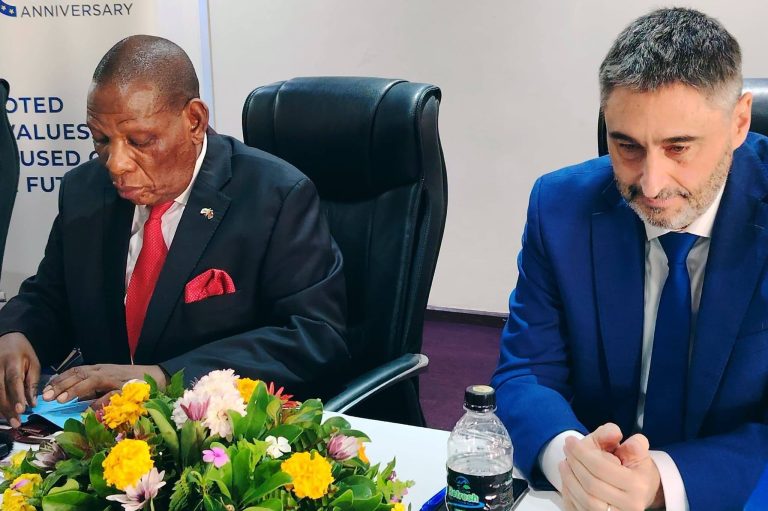
The European Union has announced a €143 million investment package for Malawi, representing one of its largest recent investments in the country. The funding was announced in Lilongwe during the launch of the EU's Annual Action Plan for 2026.
EU Ambassador to Malawi Daniel Aristi Gaztelumendi said the package was developed in partnership with the Malawian Government and is aligned with the country's Malawi Vision 2063 development agenda.
The €143 million will be divided among three major programmes.
Agriculture — €35 million
The AgriCatalyst Malawi programme will receive €35 million, equivalent to approximately K70.9 billion.
The programme aims to help Malawi move away from predominantly subsistence agriculture towards more productive, competitive and climate-resilient agricultural systems.
Particular attention will be given to rice, soybeans and coffee. The programme will support farmers, producer organisations and agribusinesses with areas such as irrigation, equipment, finance, storage, processing and access to markets.
The initiative is also intended to improve opportunities for smallholder farmers, women and young people while strengthening agricultural value chains
Energy — €40 million
A further €40 million, approximately K81.1 billion, will go towards the Malawi Energy Efficiency Enhancement Programme (ME3).
The EU contribution is expected to leverage another €85 million from the European Investment Bank, bringing the programme's potential financing to approximately €125 million.
The programme will support Malawi's electricity sector, including generation, transmission and distribution. It is also expected to help rehabilitate hydropower facilities affected by climate shocks and strengthen electricity infrastructure.
The investment will complement major projects such as the Malawi–Mozambique Interconnector and the Mpatamanga Hydropower Storage Project
The broader objective is to make electricity supply more reliable, efficient and resilient, while creating better conditions for economic and industrial development.
Education and youth — €68 million
The largest component, Empowering the Youth through Education and Skills (EYES of Malawi), will receive €68 million, roughly K137 billion.
The programme will focus on youth empowerment through education, technical and vocational training, school feeding and social protection.
It is particularly aimed at helping young people acquire skills that can lead to employment, entrepreneurship and sustainable livelihoods. The programme also places emphasis on vulnerable groups, including girls and young women and people with disabilities
Additional K26 billion budget support
Beyond the €143 million investment package, the EU has provided Malawi with an additional €13 million (about K26 billion) in direct budgetary support.
Finance Minister Joseph Mwanamvekha welcomed the funding, saying it addresses some of Malawi's major development challenges and comes at an important time when donor assistance globally is declining. He said the EU funding would contribute to agricultural productivity, energy reliability and employment creation
Why the funding matters
The investment is significant because the three programmes address several interconnected challenges facing Malawi.
Better agricultural production can improve food security and farmers' incomes. More reliable electricity can support businesses, industry and investment. At the same time, better education and vocational skills can help young Malawians enter the labour market and contribute to economic growth.
The EU says the programmes are intended to work together rather than operate as separate investments, supporting Malawi's longer-term economic transformation.
A